
【AEXNEWS】 While the global luxury industry remains fixated on century-old Western maisons, a Chinese home-furnishings brand is quietly rewriting the narrative.
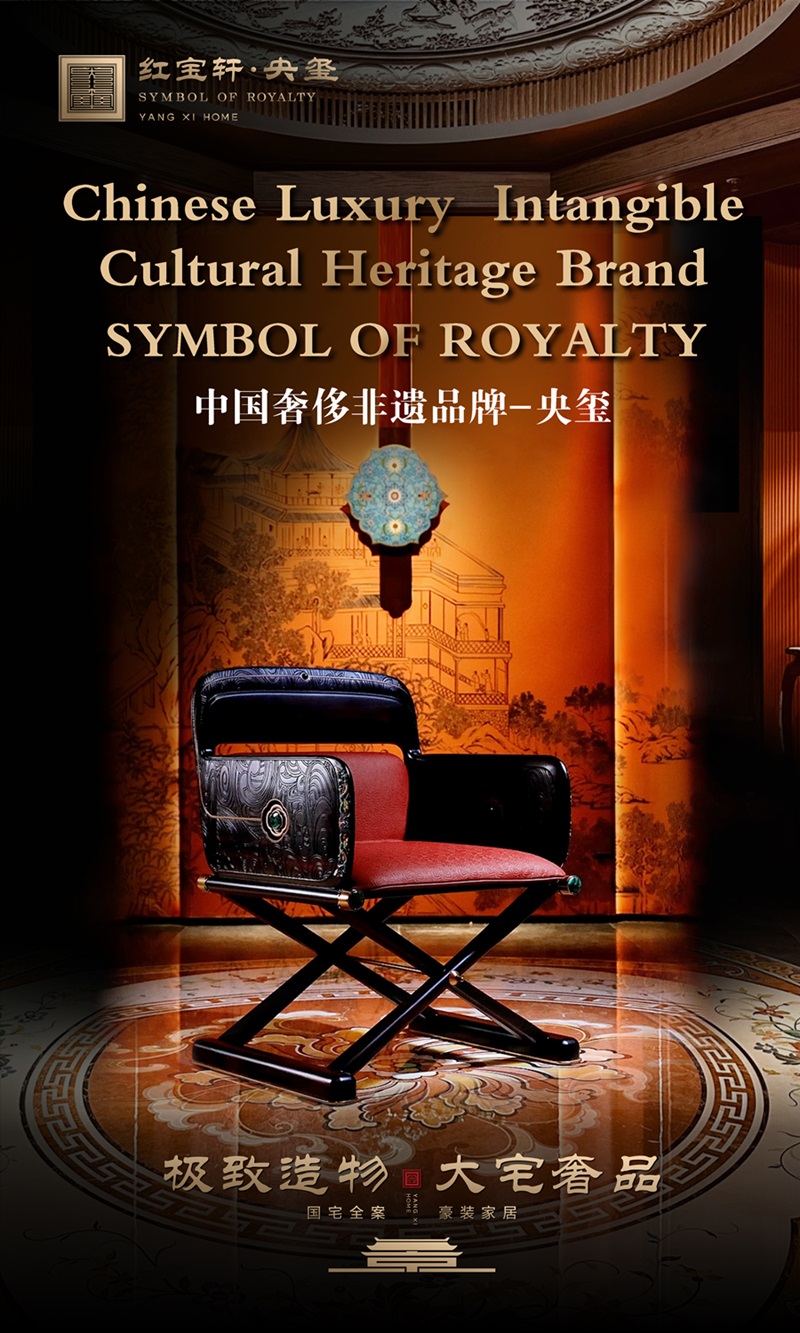
SYMBOL OF ROYALTY — a brand that fuses China's intangible cultural heritage (ICH) with contemporary luxury craftsmanship — is presenting the world with an entirely new definition of "national luxury." From ICH-infused luxury furniture to full-scale heritage interior solutions, it has pioneered an entirely new category that the industry has widely recognized and followed.
Brand Origins: From Cultural Symbol to Luxury DNA
In 2021, French luxury house Hermès introduced rosewood furniture into its product line for the first time — a move widely interpreted by the industry as a powerful signal of Eastern materials' rising stature in the global high-end market.
At that moment, Cao Zhaoting — a master of Chinese traditional craftsmanship with over four decades of experience in rosewood, Chairman of Hongbaoxuan and Founder of SYMBOL OF ROYALTY — stood at a pivotal inflection point for the industry. Hermès' move crystallized a conviction he had long held: the true value of rosewood extends far beyond its material rarity. It lies, above all, in the profound cultural depth of Chinese civilization that the material embodies. With this epiphany, he first proposed the concept of "national luxury home" in 2021, and two years later formally launched the national luxury home brand SYMBOL OF ROYALTY, seeking to forge an entirely new brand trajectory between the traditional rosewood industry and the logic of contemporary luxury.
The name SYMBOL OF ROYALTY draws its essence from a millennium of Chinese imperial cultural iconography. "Symbol" speaks to centrality — the focal point that commands the gaze of all. "Royalty" evokes the imperial jade seal, the emblem of sovereign authority and exalted status. The brand was registered in the United Kingdom, with the deliberate intent of benchmarking itself against the management systems and quality standards of international luxury maisons, while wielding China's ICH crafts as its core competitive advantage — thereby constructing a unique brand architecture defined by "an Eastern soul, expressed in a global language."
Original Design: Eastern Aesthetics Through an International Lens
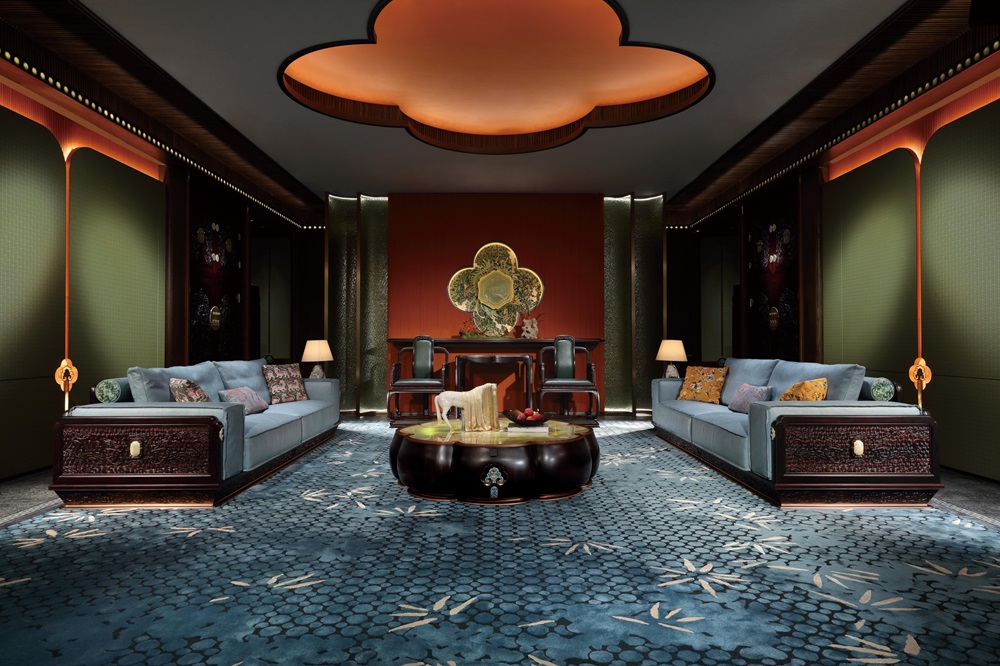
SYMBOL OF ROYALTY is uncompromising in its commitment to original design, deeply weaving an international perspective into the fabric of Eastern aesthetics. Every motif, silhouette, and even brass fitting across its entire collection is developed through bespoke molds and dedicated tooling. The brand currently holds over 100 design and utility model patents. In 2025, SYMBOL OF ROYALTY won a patent infringement lawsuit, securing judicial protection for its original designs — a landmark ruling that stirred considerable attention across China's rosewood furniture industry.
Cao Zhaoting's devotion to original design borders on the obsessive. In his view, the creative value of Chinese furniture design will ultimately be recognized by the world. "I hope that one day, foreign designers will charter private jets to come study our furniture designs in China — the way Porsche designers once flew in to examine the BYD U8."
In its product expression, SYMBOL OF ROYALTY has constructed a five-sense aesthetic system — Form, Color, Craft, Material, and Touch — translating the refined atmosphere of grand Eastern residences into a contemporary home language that can be felt, savored, and collected. Its target clientele is the apex of the social pyramid: ultra-high-net-worth individuals, serious collectors, and cultural luminaries — anchored by the value pillars of rare materials, limited-edition bespoke commissions, ICH craftsmanship, and deep cultural heritage.
The Craftsmanship Moat: Systematizing Six National-Level ICH Techniques
Departing from the majority of rosewood brands' narrow emphasis on material alone, SYMBOL OF ROYALTY has built its core competitive advantage on the systematic integration of ICH crafts. The brand has now assembled a complete crafts ecosystem encompassing six techniques recognized as national-level intangible cultural heritage: cloisonné, lacquer, treasure-inlay, carved lacquer, silver-wire filigree, and mother-of-pearl inlay.
Every piece from SYMBOL OF ROYALTY undergoes over 100 distinct processes and hundreds of rounds of refinement. The cloisonné decorative motifs alone number more than 50 proprietary designs; solid-brass fittings are produced from 128 custom-developed molds. The research-and-development cycle spanned six years, engaged 12 specialized craft departments, drew on the expertise of over 200 designers and artisans, and covered more than 80,000 kilometers in preliminary field research.
This depth of craft investment lifts SYMBOL OF ROYALTY decisively beyond the traditional rosewood model of "precious material, cursory workmanship," positioning its products not as mere functional furnishings, but as heirloom collections to be passed down through generations.
Product Evolution: From Heritage Furniture to Full-Scale Heritage Interiors
The product evolution of SYMBOL OF ROYALTY follows a distinctly generational trajectory:
Phase 1.0 — Established the brand's craft benchmarks by integrating three major ICH techniques with classic rosewood furniture forms.
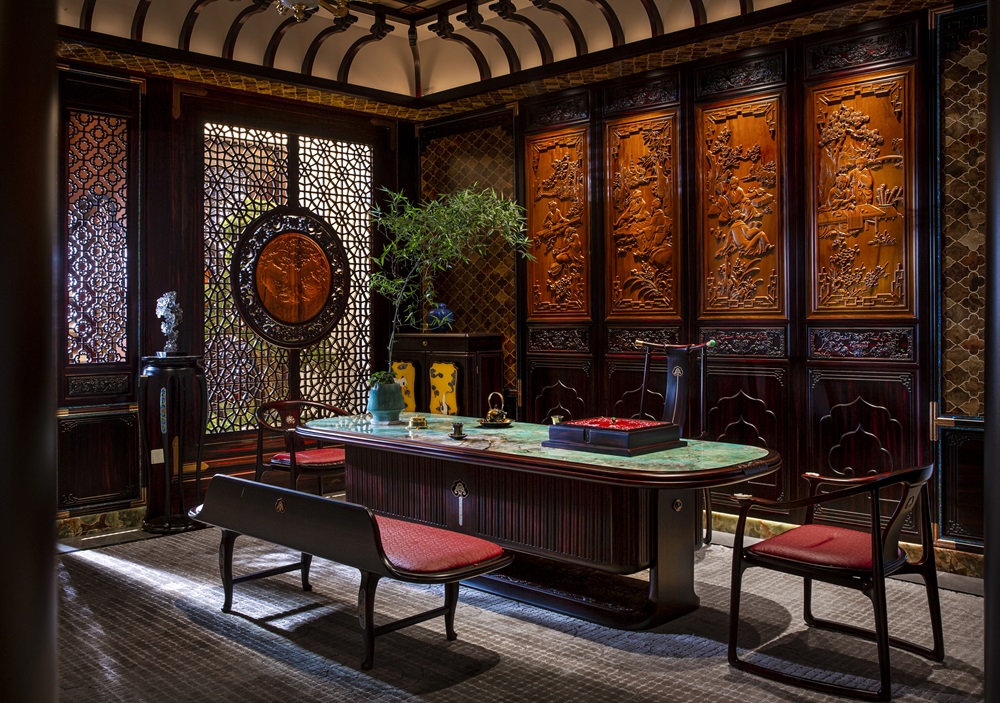
Phase 2.0 — Expanded from standalone pieces into spatial scenarios, introducing four major stylistic systems — National Luxury, Imperial Court, National Chic, and Western Aristocracy — to meet the full-home haute-couture demands of grand residences.
Phase 3.0 (current) — Constructed an integrated solution of "furniture + high-end customization + supply chain," forming a closed-loop service system spanning design, production, and delivery.
This evolutionary logic responds to high-net-worth individuals' core desire for a "total lifestyle" rather than "individual pieces of furniture," and has propelled SYMBOL OF ROYALTY's transformation from a traditional manufacturing brand into a systematic service brand — marking the decisive leap from heritage luxury furniture to full-scale heritage luxury interiors.
Dual Validation: National Endorsement and International Collectors' Recognition
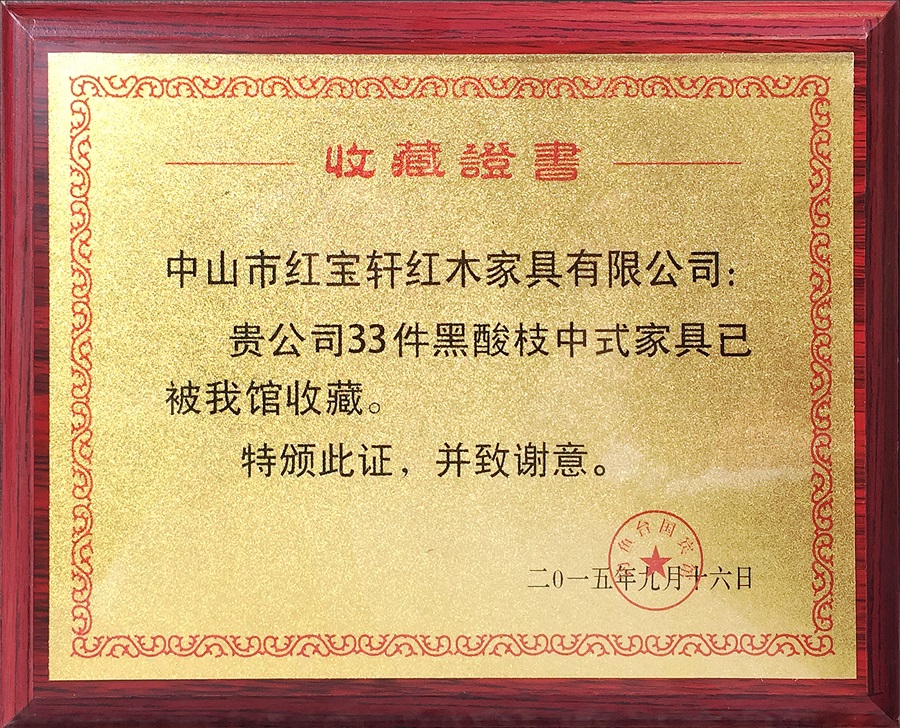
Even before the official debut of SYMBOL OF ROYALTY, 33 pieces of furniture from Hongbaoxuan had already been inducted into the collection of China's premier venue for high-level diplomatic receptions — the Diaoyutai State Guesthouse in Beijing. The institution's selection criteria are famously stringent, and it is widely regarded as one of the benchmarks of quality for China's high-end manufacturing sector.
Meanwhile, Hongbaoxuan furniture has also entered the private collections of dignitaries from nine countries. This cross-cultural recognition suggests that the brand has already achieved a consensus value — in material, in craft, and in aesthetic expression — that transcends geographic and cultural boundaries.
Cao Zhaoting is emphatic that SYMBOL OF ROYALTY is not a new brand starting from zero, but rather the natural elevation of Hongbaoxuan's decades of accumulated craftsmanship, validated at the highest tiers of the market. "The experience of furnishing the Diaoyutai State Guesthouse, together with the recognition of the international collecting community, constitutes the core marker embedded in SYMBOL OF ROYALTY's brand DNA: trusted, uncompromising quality."
This endorsement confers upon SYMBOL OF ROYALTY a natural foundation of trust and cultural persuasion when addressing the global elite.
Industry Recognition: From Category Definer to Category Leader
As the concept of "national luxury home" has been eagerly emulated by a wave of competitors, SYMBOL OF ROYALTY — through its original designs, its ICH craft system, and its capacity for sustained iteration — has been hailed by numerous domestic media outlets as the "pioneering brand of national luxury home." Cao Zhaoting himself, for his role in defining the industry concept of "national luxury" and driving its industrialization, has been recognized by multiple media outlets as "the foremost figure in national luxury home."
In professional circles, SYMBOL OF ROYALTY has earned heavyweight recognition as well. In 2024, its furniture works received the "Contemporary Chinese Furniture Grand National Masterpiece Award" and were selected among the "China Home Fashion Gala Haute Couture G20 Brands" — two honors regarded as authoritative affirmations at the highest levels of design and quality within China's home-furnishings industry.
Cao Zhaoting articulates the long-term vision in clear terms: to ensure that when the global design community evaluates premium home furnishings, the creative power and craft standards of Chinese brands are firmly included in the mainstream frame of reference.
A Chinese Luxury Blueprint for the World
As China's high-end consumer market increasingly demands cultural authenticity and consummate aesthetics, the "national luxury" path represented by SYMBOL OF ROYALTY is emerging as a globally resonant Chinese luxury blueprint. It seeks to prove that China's intangible cultural heritage can be more than museum exhibits — it can function as circulating assets and spiritual vessels within contemporary lifestyles.
As Cao Zhaoting puts it: "I hope that a hundred, even two hundred years from now, people will still be able to glimpse the silhouette of Chinese luxury furniture in the creations of SYMBOL OF ROYALTY by Hongbaoxuan." This is more than a brand vision — it is an epochal footnote to the ascent of Chinese luxury home on the world stage.